

Speech Therapy for Childhood Apraxia of Speech in Haddonfield, NJ
Specialized Apraxia Therapy from a Recognized Therapist
Our speech therapist, Ellen McSpadden, has advanced training in the evaluation and treatment of childhood apraxia of speech, including DTTC and PROMPT.
She has more than 20 years of experience and is listed in the directories of Apraxia Kids and Child Apraxia Treatment.
Not sure? Have questions?
Start with a free 30-minute consultation.
Bring your child, meet Ellen, talk through your concerns, and get help deciding the best next step. Available in the office or online.
What Is Childhood Apraxia of Speech?
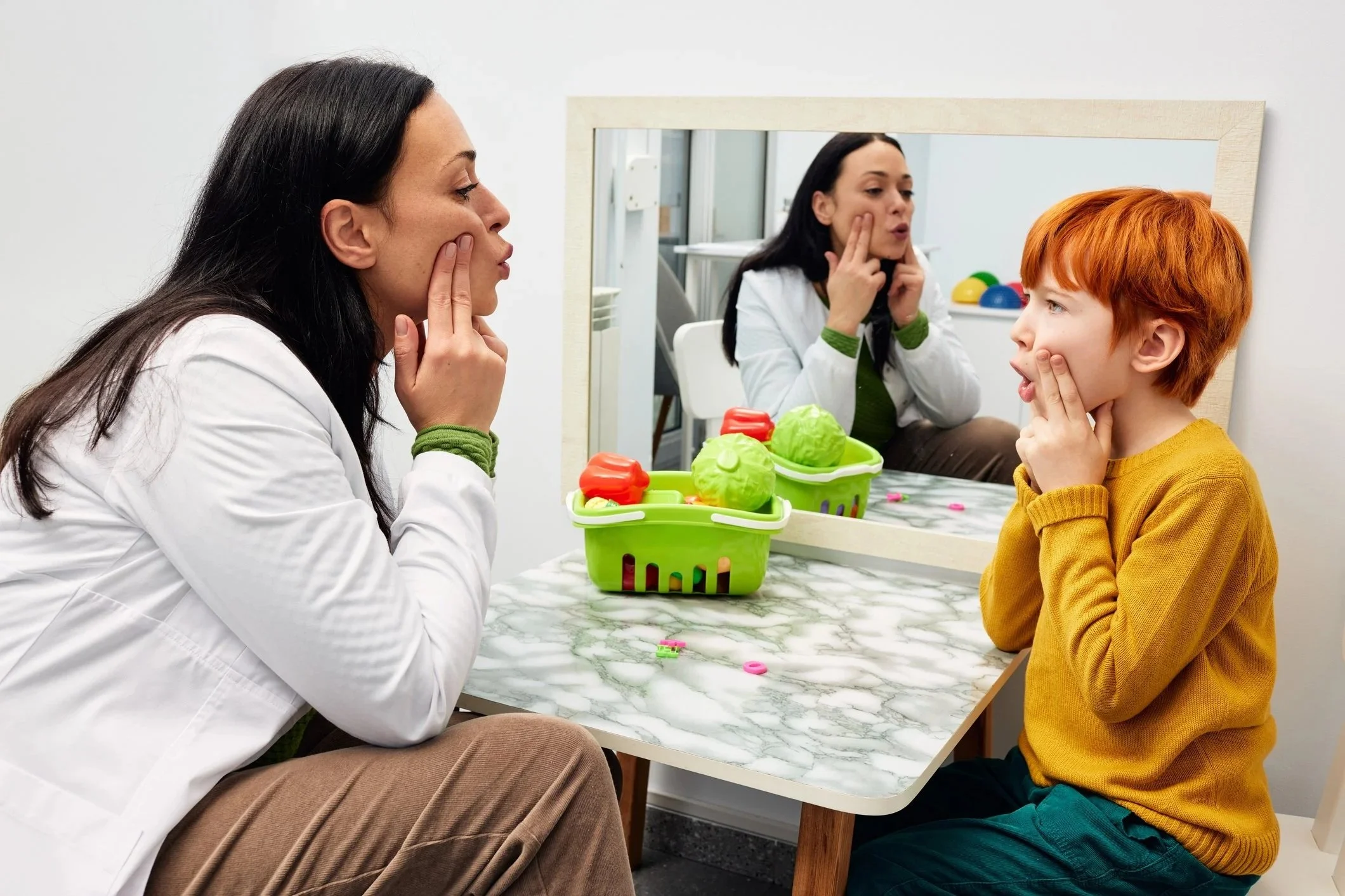
Childhood apraxia of speech is a motor-speech disorder. A child may know exactly what they want to say, but their brain has trouble planning the movements needed to say it clearly.
Symptoms can include:
Vowel or consonant sounds may be distorted
The same word may come out differently at different times
Speech may sound choppy or have unusual pauses or stress
Longer words and phrases may become more difficult
Because apraxia affects how speech movements are planned, it requires a different approach than a typical speech sound error.
Real Results for Children with Childhood Apraxia of Speech
"If you want your child to make INCREDIBLE progress, look no further than Cheerful Chatter! As a speech therapist myself, I am very particular when it comes to finding the right service provider. Before finding Ellen, I had taken my son to a few other practices. I was left disappointed and frustrated. It is difficult to find a provider who is both extremely knowledgeable in their field AND as welcoming and warm as Ellen." — Alex
"We have been seeing Ellen since 2021. My son is AuDHD, communication impaired with apraxia, ODD and can be extremely rude and difficult to work with. When we first started seeing her no one but immediate family could understand my son. His speech has improved so much since we started working with her that he’s able to communicate with everyone easily". — Brandie
-
Speech and reading development are closely connected. Some children with apraxia also need support with phonological awareness, reading, or spelling.
Because Ellen works in both speech and literacy, therapy for apraxia often includes embedded support for phonological awareness, reading, and spelling.
She knows what to watch for and can strengthen vulnerable skills early, while speech remains the primary focus.
Learn more about our reading and literacy support for school-age kids →
-
Yes — and when it is a good fit, teletherapy can work extremely well.
Since our primary approach is DTTC, which focuses on movement planning rather than physical touch, it translates naturally to a virtual setting.
We use our cameras strategically so that children and teens can watch our mouth movements in detail, and real-time parent coaching helps families use the strategies in everyday life.
-
It’s possible. Different speech-sound difficulties can look similar and stalled progress does not automatically mean a diagnosis is incorrect.
Apraxia is a complex disorder that requires a careful evaluation. Ellen looks at consistency, speech movements, sound patterns, and what happens as words and sentences become more complex to determine what type of treatment is the best fit.
If the difficulty is a result of apraxia, we will use DTTC or PROMPT to address their needs. If the difficulty is better explained by articulation or phonological patterns, our speech clarity therapy may be a better fit.
-
Cheerful Chatter primarily specializes in children and teens ages 5–18. For childhood apraxia of speech, younger children and young adults may also be considered on a case-by-case basis.
Common Questions About Childhood Apraxia of Speech
Not sure? Have questions?
Start with a free 30-minute consultation.
Bring your child, meet Ellen, talk through your concerns, and get help deciding the best next step. Available in the office or online.
How We Treat Childhood Apraxia of Speech
DTTC Therapy
Dynamic Temporal and Tactile Cueing (DTTC) was designed specifically for children with apraxia of speech. Guided by the principles of motor learning, it helps the brain learn how to plan, program, and refine the motor movements needed for clear speech.
The therapy plan focuses on movement into and between sounds. Then repeated, guided practice helps children build more accurate and consistent speech.
PROMPT Therapy
Prompts for Restructuring Oral Muscular Phonetic Targets (PROMPT) is a therapy approach often used with children with apraxia. Speech is supported by guiding the mouth through correct movements.
Because PROMPT relies on physical contact, it requires the child to be comfortable with touch around the face and mouth. It can be effective for some children, but it is not the best fit for every child or every setting.
What We Do
Ellen often uses DTTC as a primary approach for childhood apraxia because it was designed specifically for CAS and has stronger research to support it.
Her PROMPT training gives her another way to cue speech movements when touch-based support is helpful and appropriate.
Treatment approaches are chosen based on the child's individual speech needs rather than a one-size-fits-all method.